Cape Canaveral Space Force Station Launch Schedule
Stay updated on Cape Canaveral Space Force Station's rocket launches with our real-time schedule. You can see 186 planned space missions on our website. Watch the live stream of any Cape Canaveral Space Force Station rocket launch happening today.

Launch Countdown
Date & Time
20 Oct, 10:30am
UTC

Pad
Space Launch Complex 40
Launch Service Provider

Vehicle
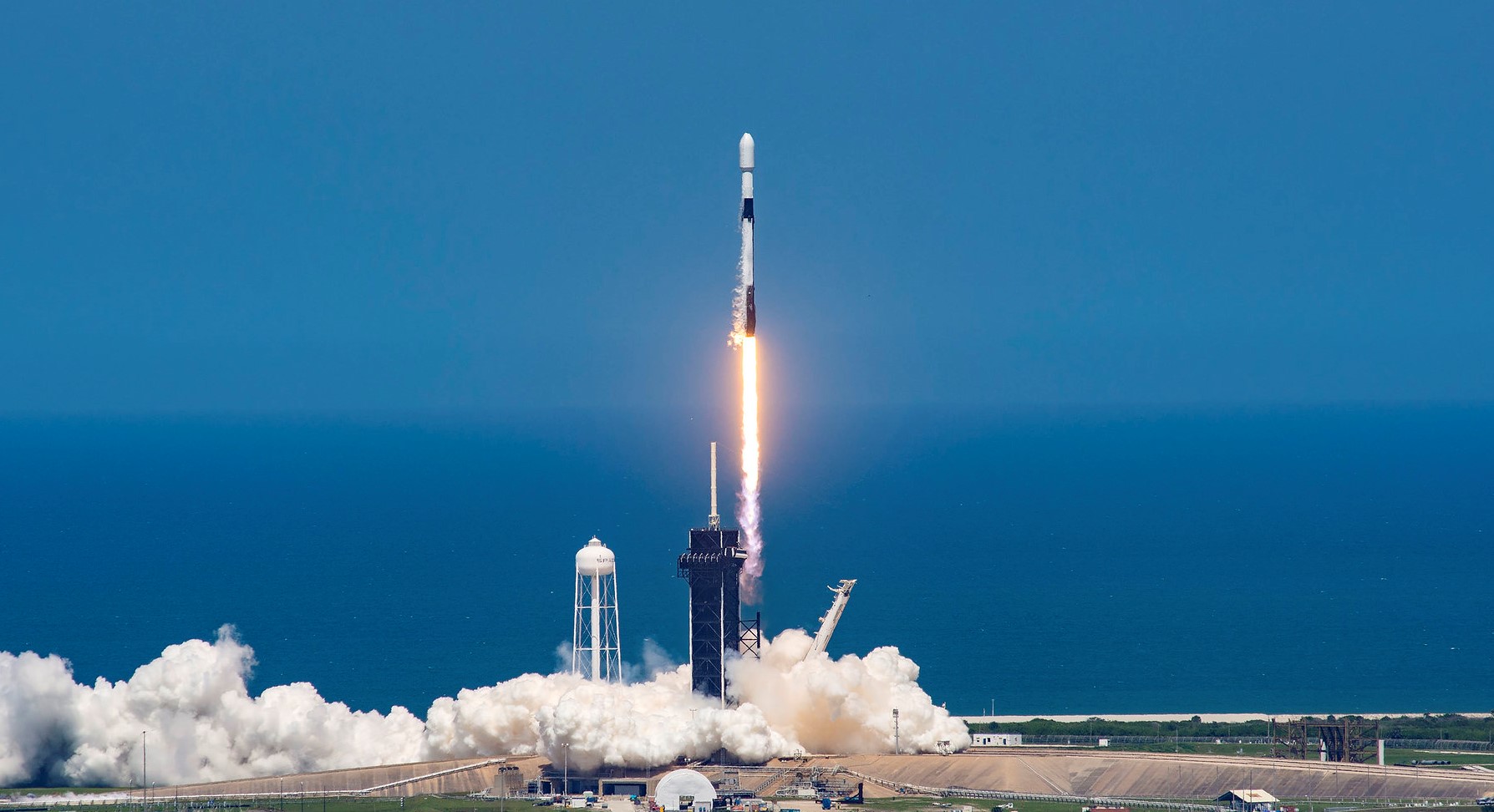
Booster
B1085
19th flight (69d since last use)
Landing
Drone Ship (A Shortfall of Gravitas)
Mission
Bandwagon 5 (Dedicated Mid-Inclination Rideshare)
Mission Type
Dedicated Rideshare
Destination
Low Earth Orbit
Dedicated rideshare flight to a mid-inclination orbit with dozens of small microsatellites and nanosatellites for commercial and government customers. This launch also carries the second demonstration mission for SpaceX’s Project Starfall, which aims to mass-produce reentry capsules designed to autonomously transport valuable customer experiments and other payloads safely back from space to Earth, including for in-orbit manufacturing. Starfall is a cylindrical shaped capsule approximately 0.75 meters tall with a diameter of 3.1 meters, weighing approximately 2100 kilograms, and capable of carrying 1000 kilograms of payload. It is designed to be carried on Starship flights.
Last Update: Now targeting Oct 20 at 10:30 UTC
🔔 Set up an email alert for upcoming launches
Get a weekly email containing all launches scheduled for the coming week.
Upcoming Cape Canaveral Space Force Station Launches

TBD
Oct 2026
Amazon Leo, formerly known as Project Kuiper, is a mega constellation of satellites in Low Earth Orbit that will offer broadband internet access, this constellation will be managed by Kuiper Systems LLC, a subsidiary of Amazon. This constellation is planned to be composed of 3,276 satellites. The satellites are projected to be placed in 98 orbital planes in three orbital layers, one at 590 km, 610 km and 630 km altitude. 45 satellites will be carried on each Vulcan launch.
Last Update: NET October 29.
TBD
Nov 2026
This is the 25th flight of the Orbital ATK's uncrewed resupply spacecraft Cygnus and its 24th flight to the International Space Station under the Commercial Resupply Services contract with NASA.
Last Update: NET late November.
First flight of the Dream Chaser Spaceplane, on a free-flying mission in Low Earth Orbit.
Last Update: NET late 2026 with ISS docking cancelled.

TBD
2026
Impulse Space's Mars Lander is designed to support research and development needed for human exploration of Mars.
Updated: Aug 23, 2:30am UTC
Payload consists of a single 30 kg NASA payload to be delivered to a 500 km orbit with a 41 degrees inclination.
Last Update: Launch vehicle choice now uncertain with Relativity Space planning to retire Terran-1 immediately; may switch to Terran-R but launch would then be NET 2026.
Classified payload for the US Space Force
Last Update: Not planned within the 2024 NSSL mission manifest.
TBD
2026
Inmarsat-7 is the seventh generation of satellites for the London-based global mobile satellite communications operator Inmarsat. The three satellites of the series - GX-7, 8 & 9 - will have an improved fully reconfigurable Ka-band payload for Inmarsat's Global Xpress services. They are optimized for real-time mobility and feature thousands of dynamically-formed beams that direct capacity with laser-like precision over high-demand areas, to provide HTS (High Throughput) broadband connectivity for the mobility market. The satellites will be based on Airbus’ new standard and fully reconfigurable satellite product line OneSat. Fully reconfigurable and featuring on board processing and active antennas, the three Ka-band spacecraft will be able to adjust their coverage, capacity and frequency.
Last Update: NET Q4 2026.

Amazon Leo, formerly known as Project Kuiper, is a mega constellation of satellites in Low Earth Orbit that will offer broadband internet access, this constellation will be managed by Kuiper Systems LLC, a subsidiary of Amazon. This constellation is planned to be composed of 3,276 satellites. The satellites are projected to be placed in 98 orbital planes in three orbital layers, one at 590 km, 610 km and 630 km altitude. 48 satellites will be carried on this New Glenn launch.
Last Update: Reverted back to NET 2026 due to New Glenn GS1 booster static fire explosion. The payload was not loaded during the static fire.
Classified payload for the US Space Force.
Updated: Sep 5, 12:00pm UTC
Classified payload for the US Space Force.
Updated: Sep 8, 2:00pm UTC
Classified payload for the US Space Force.
Updated: Sep 5, 1:00pm UTC
Last mission of the Wideband Global SatCom (WGS) series.
Last Update: NET Q1 2026.
CHORUS is MDA's next generation Earth observation constellation, consisting of 2 radar satellites (C-band SAR and X-band SAR), in a 53.5 degree 600 km altitude LEO, with the X-band trailing the C-band by 60 minutes. A collaborative multi-sensor constellation, CHORUS will bring together diverse and unique imagery and data sources and provide a new level of near real-time insight and innovative Earth observation services. Operating in a unique mid-inclination orbit, CHORUS will be able to image day or night, regardless of weather conditions, with daily access of up to 95% of the coverage area. From an industry-leading 700km-wide imaging swath down to sub-metre high resolution, CHORUS will provide the most extensive and unrivalled Earth observation radar imaging capacity available on the market in a single mission.
Last Update: NET late 2026.
Classified US Space Force carrying two payloads directly to geostationary orbit.
Updated: Dec 19, 3:00pm UTC
Classified payload for the US National Reconnaissance Office
Last Update: NET Q2, after USSF-57.
TBD
2026
Up to 18 satellites manufactured by MDA for Canadian satellite operator Telesat's Lightspeed constellation.
Last Update: NET December 2026
TBD
2026
Up to 18 satellites manufactured by MDA for Canadian satellite operator Telesat's Lightspeed constellation.
Updated: Apr 12, 11:33pm UTC
TBD
2026
Up to 18 satellites manufactured by MDA for Canadian satellite operator Telesat's Lightspeed constellation.
Updated: Apr 12, 11:33pm UTC
TBD
2026
Up to 18 satellites manufactured by MDA for Canadian satellite operator Telesat's Lightspeed constellation.
Updated: Apr 12, 11:33pm UTC
TBD
2026
Up to 18 satellites manufactured by MDA for Canadian satellite operator Telesat's Lightspeed constellation.
Updated: Apr 12, 11:33pm UTC
TBD
2026
Up to 18 satellites manufactured by MDA for Canadian satellite operator Telesat's Lightspeed constellation.
Updated: Apr 12, 11:33pm UTC
TBD
2026
Up to 18 satellites manufactured by MDA for Canadian satellite operator Telesat's Lightspeed constellation.
Updated: Apr 12, 11:33pm UTC
TBD
2026
First mission part of a multi-year, multi-launch agreement signed between Intelsat and Relativity Space in 2023.
Updated: Jan 3, 8:05pm UTC
Classified payload for the US National Reconnaissance Office
Updated: Jan 3, 8:05pm UTC